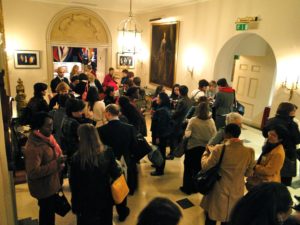
HRF launches the Global Home Index at the House of Commons | November 2017
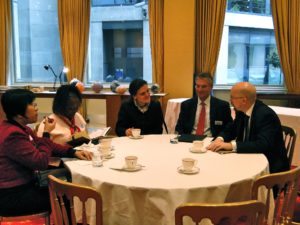
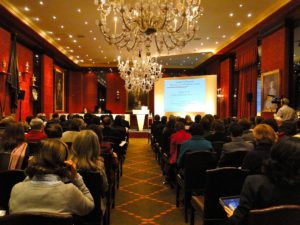
Home Renaissance Foundation and its UK-based partner, Mothers at Home Matter, launched the results of the British Report of the Global Home Index at the House of Commons.
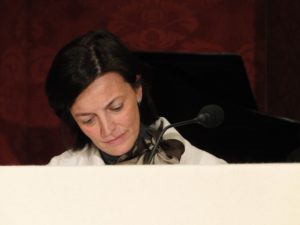
The guest speaker, Miriam González Durántez applauded the fact that a very substantial amount of our GDP is generated through the support network of the home but said “historically the home has been run by women who didn’t have any power in society. Their contribution has gone therefore unrecognised.”
Following the idea of British journalist Colin Brazier, of Sky News UK, the survey is a comparative study measuring perceptions on the work of the home in 20 countries.
According to the study, answered by over 9, 000 people worldwide, around 60% of participants strongly agreed that homemaking can teach skills applicable to other areas of life. However, at present few families appear to be regularly distributing tasks amongst themselves (15-25% of those surveyed).
One of the lessons to be learnt from the home study includes healthy eating. With almost half of participants claiming to routinely cook homemade meals, many clearly recognise that the home is a critical source of nutrition and paves the way for future dietary awareness. Miriam González relates strongly to this since she feels absolutely satisfied being a homemaker and having built her own home. Her greatest recognition comes from their boys and she joked: “I am a Spanish Mum so I find myself doing the same things my mother did and with the same ruthlessness. My boys will recognise that, as far as they are concerned, no-one cooks as well as their Mum!”
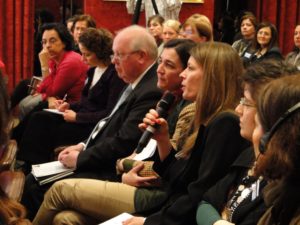
One of the things that was discussed when the dialogue was opened was the meaning of success. “I am not more or less feminist for following my husband and leaving my job in Brussels because the decision was born from my freedom of choice”, Miriam González Durantez said.
According to Miriam González Durantez, the concept of success is changing. She would not be a successful woman if one side of her life failed. Both family and professional lives should come together to consider that it is a success. She recognises that her success comes not only from her effort and hard work but the environment where she grew up.
The research points out that the home must be considered in the design of future public and corporate policies. And it should serve as a reference point when considering the societal benefit of a new policy.
Fiona Bruce, MP for Congleton, who hosted the event, confirmed that she and David Burrowes have lined up a meeting with the Prime Minister to discuss future policy that puts the family first.
Press Contact:
Media Contacts: Ángela de Miguel
Email: press@homerenaissancefoundation.org
Telephone: + 44 020 7490 3296
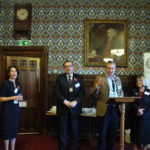
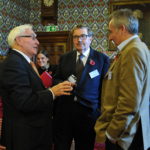
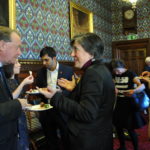

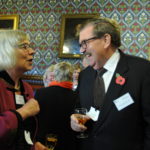
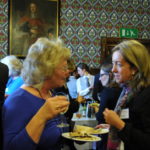
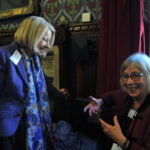
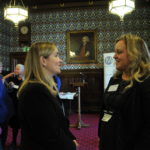
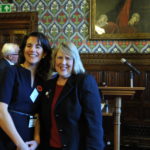
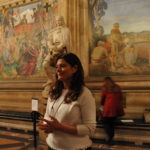
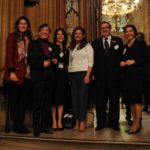
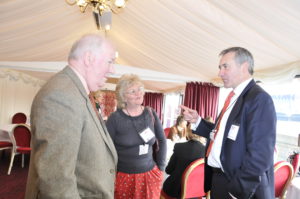
Event at the House of Commons
Less is more, or not!
Best friends forever?
The rise of the plastic home
“Family” : A Psephological Holy Grail?
HRF launches its inaurgural policy paper at The House of Lords | March 2015
A group of experts and other invited guests were on hand to listen to speeches by Lord Best, President of the Local Government Association, and HRF chairman Bryan Sanderson CBE.
A presentation of ‘Bricks & Mortar Across Generations: A Think Piece on Intergenerational Living in the UK’ was made by HRF Research Coordinator Simca Simpson. Dr Samantha Callan then spoke as a respondent to the think piece.
Some of the issues raised by the study formed part of a discussion at the event, led by the veteran broadcaster and author Charles Handy who said his own experience of sharing a home with a younger generation – his daughter – informed his belief that it was an idea whose time had come.
“Norms are changing,” he said. “The cost of housing will bring us together, like it or not.” He said that, although many people were propelled into intergenerational living because of economic circumstances, others had realised that it had lots to offer. “It is a chance to share wisdom. I am shown how to use an iPad, they are shown how to play Scrabble!” He said intergenerational living should not be unduly romanticised. “To work best,” he said, “takes rules and a door bell.”
Like Mr Handy, the HRF chairman Bryan Sanderson CBE, also lives in a house that is home to several generations of the same family; grandparents, parents and grandchildren. He noted that Western societies could learn much from the models of intergenerational living taken for granted in the developing world. And he described the housing crisis and potential solutions like intergenerational living as “the most significant political issue of our time”.
Dr Callan drew attention to the example of Singapore, where intergenerational living is encouraged through the taxation system. She said that intergenerational living was vital if society was to avoid an epidemic of loneliness, while commenting that: “There have been massive changes in families – but not in the housing structures around them.” Dr Callan, a mother of teenaged boys, said that intergenerational living was no longer seen as a mark of failure. On the contrary “…it is increasingly seen as a sign of family strength for generations to live together.”
One of the delegates at the launch praised the HRF’s choice of subject and noted that intergenerational living was the subject of the next World Congress on Families.


Home & Identity Conference in Rome 2012
- Waikato University takes over organisation of HRF Conference
- Home & Identity: The public-private nexus takes place in Rome
- Jean-Claude Kaufmann and Giuliana Mandich among keynote speakers
LONDON, 27 October 2012 – Home Renaissance Foundation is gaining renown in its own right throughout all corners of the world. This has been proved especially this year, as New Zealand takes over the organisation of our next conference.
Home and Identity: The public-private nexus,which will take place between 14-15 November in Rome this year has been a collaborative effort between Waikato University and Roma Tre University, with Fondazione Oikia and Home Renaissance Foundation.
The Conference aims to explore reasons as to why those who work in the home, often do not position themselves highly when comparing their social identity to other groups or occupations. The home transgresses many aspects of social identity, yet the work of the home does not generally deliver tangible or recognisable goals or outputs that lead to an identity easily recognised or valued by society, especially Western society.
The home is central to personal identity and all its intrinsic and extrinsic manifestations but this has not been studied. Presentations given by esteemed academics centre around historical and anthropological theories of the home, industry influences, human development and gender identity among others.
Keynote speakers include:
- Home of Little Happiness: Jean-Claude Kaufmann, of National Centre of Scientific Research is a French sociologist and author of Le Sac: A little world of love.
- Home boundaries, everyday cultures and capabilities: Giuliana Mandich, expert on urban sociology, social networks and social capital, Professor of Sociology with the University of Caligari, Faculty of Political Science.
- Repositioning the boundaries: memory and plans in the homes of young women: Marita Rampazi, referee for TIME magazine on sociology related economic and business issues, Professor of Sociology, University of Pavia.
- Being a woman in the contemporary confusion: Fiorenza Deriu, Adjunct Professor, Faculty of Statistical Sciences, Universita La Sapienza. Author of La cittadinanza difficile: Memorie di vita femminile.
Home Renaissance Foundation is pleased to invite members of the press to attend the conference in part or in its entirety. Please contact us for further information on the speakers and the scientific committee members.
Press Contact:
Media Contacts: Irene Gargoles or Joanna Roughton
Email: press@homerenaissancefoundation.org
Telephone: + 44 020 7490 3296
3rd HRF Conference 2011 | Sustainable Living #Day2
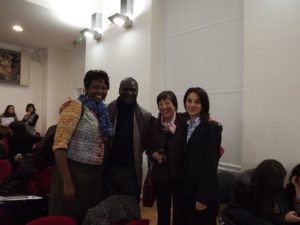
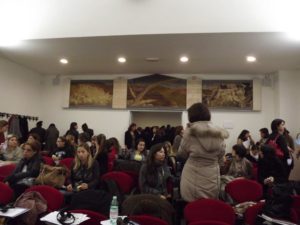
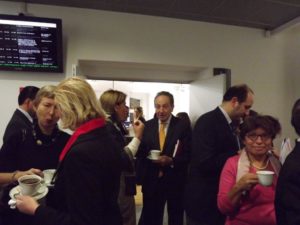
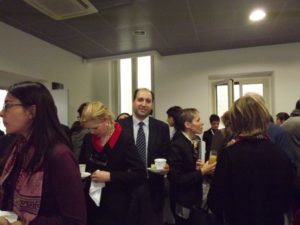
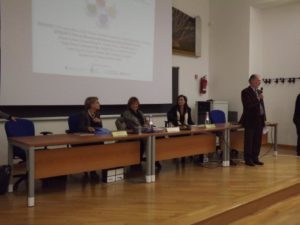
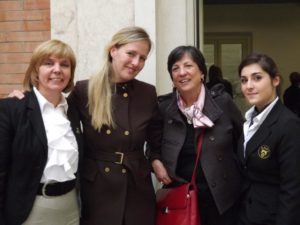
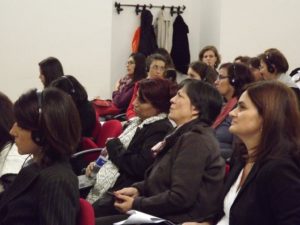
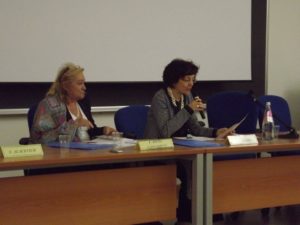
A sustainable society is made up of individuals with basic human needs that need to be met. For most people ‘home’ is a place that recalls happy memories and feelings of warmth, acceptance, comfort and care. It is also a place where these basic human needs are met in a way that respects their human dignity and enables them to develop to their full potential, be it socially or professionally.
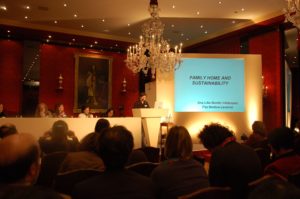
During day two of the Sustainable Living: Professional Approaches to Housework international conference speakers and panellists drew from their different realms of professional and academic expertise to explore the important role the homemaker plays in social sustainability. If ‘home’ is a feeling, as Professor Mauri Ahlberg of the University of Helsinki suggested in his presentation, then it is one brought about by being in the company of people who make us happy, around whom we are comfortable and who we trust to look after us. According to the Finnish ecologist, this is why care and love between spouses and children is important in the home. Important as they may be for our well-being, the home’s contribution to our lives is not only emotional. Although it is rarely acknowledged, household production also contributes significantly to the economy.
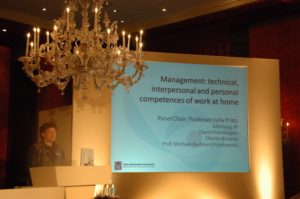
During a panel discussion on the competences of housework, Dr. Michael-Burkhard Piorkowsky, a professor of household economics at the University of Bonn, mentioned that among other important functions of the household such as regeneration, procreation and socialisation, human capital is produced primarily in the home. In fact, for some people – for many people, given that domestic service is one of the fastest growing economic sectors in Europe, the US and many other countries throughout the world – the home is a place of work.
Professor Peggie Smith of the University of Washington in St. Louis, Missouri, pointed out that the poor working conditions domestic workers face (long hours, low wages and no benefits to name a few) are linked to the little value given to women’s unpaid work in the home. ‘One of the major problems is that domestic service is seen to rely on a woman’s innate skills rather than on training. It is considered to be an extension of women’s unpaid work in the home.’
Dr. David Prendergast of Intel Corp. also highlighted the role homemakers can play in elderly care, an issue that has become a hot topic in recent years and which will continue grow in importance with the ageing population. ‘There has been a degradation in the quality of companionship in caregiving for the elderly. 4.6 million older people consider the television to be their main source of companionship.’ So what can be done? One of the immediate findings of the conference is that the value of good domestic role models is immeasurable.
Professor Rosa Lastra, patron of HRF and member of the Scientific Committee for the Sustainable Living conference was applauded by Professor Smith for her unwavering support of the value of domestic work: ‘housework is not something we should economise on.’ Businesses can also lead by example as was clearly demonstrated in the presentations given by representatives from IKEA UK & IE and Intel Corp. When it comes to sustainability, homes that are run as small businesses can benefit from big businesses’ best practice. ‘If it is good business for us, then it might be a good idea for the household,’ stated Mr. Browne, IKEA UK and IE’s Sustainability Manager.
According to Dr. Prendergast, companies like Intel Copr. are also developing new ways to work with the household to improve well-being. ‘We should combine the use of advances in technology with face-to-face contact and resources.’ From a professional standpoint, both Professor Peggie Smith and Professor Lastra were very clear: not only does the specificity of housework (be it paid or unpaid) require new legal frameworks that take the ethical dimensions of this work into account, but those carrying it out also need to be empowered through training initiatives.
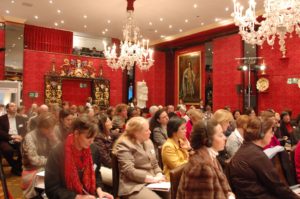
As the conference drew to a close, questions were raised and points for further research and consideration were outlined. The Excellence in the Home conferences do not presume to offer universal answers but they are a first step towards acting as a catalyst that renews the culture of the home. Gathering over a hundred experts from around the world to discuss the value of the work of the home is an important way to bring this discussion to the fore and start brainstorming. ‘More work still needs to be done’ was the closing message of the conference, and thanks to the excellent contributions during the two days, delegates left galvanised for the pursuit of this task.
Press Contact:
Media Contacts: Ángela de Miguel
Email: press@homerenaissancefoundation.org
Telephone: + 44 020 7490 3296
-
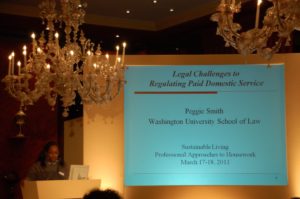
- Dr. Peggie Smith (USA)
-
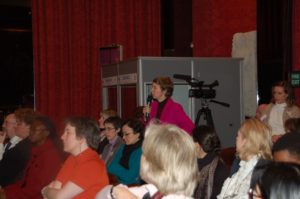
- Caroline Sanderson (HRF)
-
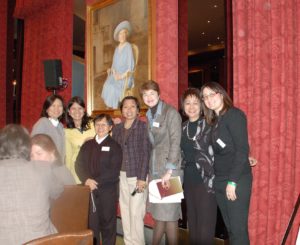
- Delegates from Philipines, USA & Italy
-
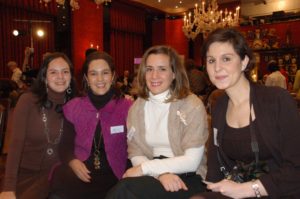
- HRF collaborators from Chile & UK
-
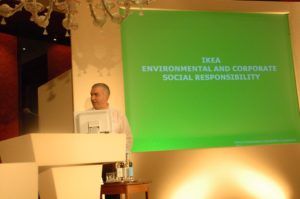
- Mr. Charlie Browne ( IKEA, UK)
-
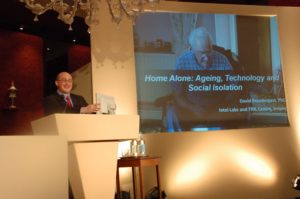
- Dr. David Prendergast (Intel)
-
- Roddy Kennedy with HRF team