Help at Hand?

The current media focus on digital technology has paid great – and necessary – attention to the dangers of these developments to our children. It is good this week to change the focus from dangers to benefits and from children to the older generation.

This is certainly the intention of Dr Ardhendu Behera Senior Lecturer the  Department of Computer Science, Edge Hill University in Lancashire. Expert in the area of Human-Robot Interaction (HRI) Dr Behera and his team have been working on Robbie, a toddler sized robot who is learning how to apply HRI skills to real life care situations. As Dr Behera explained in an interview with the Lancaster Post:

“In modern times with our aging society, we believe robots can play a vital role in the care of older people. They could also be used in a traditional home setting, observing an older person between visits by a carer or relative for example. The possibilities are endless.”

Dr Behera continued, that although robots are increasingly used in healthcare diagnostics and surgery, “they are not yet used in the social care sector where we see huge potential for development and growth. Robots like Robbie could be used in so many situations and settings to monitor vulnerable people. Initially, we see Robbie being most useful in residential care homes where he can be a companion to residents and can keep an eye on them, watching and recording what they eat, drink, if they take their medication, their emotions and more.”

We may find it amusing that one of the ways Robbie is being trained is by watching episodes of Emmerdale and Friends, but the seriousness and importance of the project cannot be overestimated. The crisis in social care, the epidemics of loneliness and mental health issues will need creative responses from us all. There is certainly space for Robbie and his later versions in this.

But there also needs to be space, funds and time for more HHI – Human-Human Interactions. One of the causes of the social care deficit is the human cost of caring. Families struggle to juggle the demands of full-time work, child-care, and increasingly, caring for older relatives too.

At Home Renaissance Foundation we have been interested to learn about Backto60, a campaign group fighting to give women who lost out in the realignment of pensions in 2010 the right to claim a state pension at 60. Backto60 points out that these are women born in the 1950s, who stepped out of the workplace repeatedly to do unpaid caring work for their families. A contribution that has not been recognized or valued and now puts women in positions of hardship and distress, argues Joanna Welch, Backto60 representative.

Underlying this campaign and much of the discussion of social care is about how society values the work of caring for each other. The fact that it is most often done out of love and ties of family affection does not mean it should be taken for granted. Quite the reverse, it should be valued and supported even more because this weight is carried by individuals rather than by organizations.

Just how best this work of caring is supported is the subject of live debate, not least by HRF (See Conference 2017). It will take more than Robbie watching Emmerdale – useful though these applications might be – to address the real challenges we face.

Are we watching what they’re watching?

This week the British press has been full of shocking reports on the negative effects of social media on children and young people. Health Secretary Matt Hancock MP promised that digital giants Facebook and Instagram and others risk being banned if they do not stop harmful online content reaching vulnerable children and young people. He was responding to the heart-breaking case of Molly Russell, who took her own life in 2017 at the age of 14, encouraged, her father is convinced, by internet self-harming sites. These thoughts were echoed by Sir Nick Clegg in his role as new Facebook vice-president who has told the BBC the firm will do “whatever it takes” to make its social media platforms safer for young people.

Katherine Rushton reported in the Daily Mail this week on a “Generation of child web addicts: Youngsters are becoming so obsessed with the internet they spend more time on YouTube than with friends as parents struggle to keep control of their online usage.”

It is not just a live topic in the UK, on the same day last week The Times carried findings from the Journal of American Medical Association (JAMA) “Is increased screen time associated with poor performance on children’s developmental screening tests?” Answer: YES.  “Higher levels of screen time in children aged 24 and 36 months were associated with poor performance in achievement of development milestones
.Excessive screen time can impinge on children’s ability to develop optimally; it is recommended that pediatricians and health care practitioners guide parents on appropriate amounts of screen exposure and discuss potential consequences of excessive screen use.”

Meanwhile across the channel, Population Europe has just published research on “The Mental Toll of Being Connected: What kind of impact is social media having on adolescent health?” Answer: “Social media use among adolescents has resulted in higher levels of unhappiness, anxiety and depression among young people.”

This message and JAMA’s findings only underline the growing unease society as a whole and parents in particular find in traversing this new digital minefield. These screens and their content are not just being seen in the playground, the street, the park, but in children’s bedrooms – in their homes. The place they should be safest. The place it now seems they can be most at risk.

The Home Renaissance Foundation’s vision and activity is to pay attention to the home and to understand and to support the home’s key role in forming and sustaining society. It is with this concern at heart that HRF has called a meeting of experts in the world of AI and digital technology: The Home in the Digital Age 25 -26 February in London to address these issues and help to develop guidance – something we all need to take home.

Parenting for a Digital Future

Being a parent has always been a mixture of great challenges and great rewards. For the current generation of children and parents a new challenge – and potential reward – has come very much to the fore in recent years: How to be a parent in the Digital Age.

The vexed question of screen time is big news. Kirstie Allsopp, presenter and property guru, found herself in a social media storm last summer by smashing her sons ipads when they flouted her screen time rules. It is a question that plays itself out in countless bedrooms and living rooms of homes throughout the country, not only those of celebrities: how much time in front of a screen is right/best/healthy for our children?

The question has had an interesting sidelight shone on it by recent reports that the people in Silicon Valley responsible for developing the very products that keep our children glued to the screen do not want this for their own children. The children of the digital titans are growing up screen free. What does this say about the challenge/reward or promise/threat dynamic for our own parenting choices?

It is an area that keynote speaker Sonia Livingstone OBE FBA will address at the Home Renaissance Foundation’s Experts’ Meeting in London next month.  Sonia Livingstone OBE FBA is a professor of Social Psychology and former head of the Department of Media and Communications at the London School of Economics and Political Science and has dedicated much of her research to children, media and the Internet. Introducing her recent work Parenting for a Digital Future Professor Livingstone sets out the issues at stake: “The pace of recent advances in digital media leaves many parents and carers increasingly anxious about what these changes will mean for their children, now and in the future. How do parents and carers approach the task of bringing up their children in the digital age? What risks or opportunities do they see opening up for them and their children?”

Risks and opportunities for our children and the whole of society as they grow up and take their place in a complex world. Nothing can be more important than asking the questions and starting to frame some answers.

Artificial Intelligence and the Home

Next month, experts in AI and Digital Technology from across the globe will be meeting in London to share their knowledge and insights on this live and important topic: Artificial Intelligence and the Home in the Digital Age.

Hosted by the Home Renaissance Foundation (HRF) and the Social Trends Institute (STI) this will be the first key international gathering to address questions about the nature and implications of AI in our homes.

The meeting brings together world-class expertise from fields of computational logic, digital economics, sociology, philosophy of science and architecture. The discussion promises to bring light to an area often ignored by academics and the media: the Home Front.

Much attention has been given to the effects of AI on individuals and on the workplace. Far less has been written or discussed on the implications on the new technologies on the life and work of the home. The home though is truly the front line for many of these developments. HRF has been ground-breaking in raising awareness of this. The home, common to us all, is often lost in plain sight. By channeling attention to the specific context of the home HRF intends to sharpen the focus of the AI debate.

Digital Home: Recognise the Threat and Realise the Promise, to be covered by Mei Lin Fung is a strong example of this focus. Mei Lin Fung is a technology pioneer working to ensure that technology works for humanity as the next 3.9 billion people come online. In 2015, she joined “father of the Internet,” Vint Cerf, to co-found the People-Centered Internet (PCI) which maintains a global network of “positive change agents” committed to ensuring that technology is developed with a “people-centered” focus – increasing access while ensuring equality, protecting the vulnerable, and prioritizing human wellbeing.

From the cutting edge of AI development, Francesca Toni will provide the meeting with a current survey of AI in the Home and Society at large. Francesca Toni is Professor in Computational Logic in the Department of Computing at Imperial College London, where she is a member of the Artificial Intelligence research theme and the leader of the CLArg (Computational Logic and Argumentation) research group. She is also a member and co-leader of the AI@Imperial Network of Excellence.

Threats and Promises, Knowledge, Representation and Reasoning in Artificial Intelligence, just two of the discussions that will be taking place at the Royal Society of Medicine in London from 25 -26 February 2019. More details of sessions and contributors to The Home in The Digital Age next week.

Who are we letting in?

The very words Artificial Intelligence make us pause. Artificial doesn’t have a good press. It makes us think of things added to our food – sweeteners and “E numbers”, of things that are fake, made up, that tell us lies.

No wonder that those working in this field prefer to stick to the acronym AI or in some cases the word “robotics” – though that too has some deep echoes from science-fiction.

The truth is that the importance of the phrase Artificial Intelligence is found in its second word not its first. Intelligence. Whose intelligence and to what end?

In our homes, we have embraced increasingly “intelligent” technology. From the early days of the self-cancelling kettle engineers and designers have strived to make the equipment of the home more responsive to our needs and to make this factor more key to our purchasing decisions.

It was great to have a fridge that did not need defrosting -but what about one that notices we are running out of milk and accesses our bank details to order in more? It was great having an app to be able to monitor our fitness by checking we did 10,000 steps every day – but what about one that checks our vital signs and suggests therapies and medications? It was great sometimes to put the kids in front of cartoons on the TV – but to have each of them cocooned in their own privately curated screen-world? Hmm. Not so sure.

Amazon has sold over 100 million “Alexa’s” and the cheaper versions are finding a place in many more of our homes.  AI, its benefits and its challenges have crept up on us. Like a guest who slowly takes over the house. We might really like our guest, but it might be useful to know where he comes from and what his plans are.

Films and novels have frequently picked up on the extreme edges of AI fears, from I, Robot to Ex Machina. We regularly see the narrative of the gentle home-robot whose systems fail and who turns into a deadly weapon. The counter top “helper” who eavesdrops and sends details of our private lives across the internet, or worse.

We are right to question the dangers of sharing too much with machines, but we are also required to use our own intelligence. We do not have to sync our whole lives to our phones. Our children will survive without Netflix and wifi.

The Home Renaissance Foundation is hosting its next Experts’ Meeting on 25th -26th February in London, to look widely and deeply at this issue. The gathered experts will discuss the opportunities the new technologies offer as well as some of the challenges they present to the homes of today and tomorrow. In all these discussions though, the importance of our own judgement, discernment and yes, intelligence, will be key.

In future articles, we look forward to sharing some of those questions and with you and to introduce you to some of the major academic contributors to this discussion, drawn from the worlds of science, economics, sociology and philosophy. Real Intelligence at work.

The Home in the Digital Age

We live in a world where technological advance and above all the astonishing pace of change is challenging many of the values and modus operandi we have long taken for granted. Much of this change coupled with the increased transparency which comes with it is undoubtedly for the good of society and especially disadvantaged minorities but equally there is no doubt that some of its use or abuse can be threatening.

Within this political and societal maelstrom, the aim of Home is to raise awareness of the home as a vital contributor to individual and social wellbeing. Our work is through research and academic meetings on current relevant trends and challenges. There can be few trends more relevant and challenging than the one identified as the focus of our next Experts’ Meeting: The Home in the Digital Age. What are the contributions – and what are the dangers – of Artificial Intelligence in our homes? In other words, “Who are we letting in?”

The framework of the Experts’ Meeting, successfully designed and developed by the Social Trends Institute, is highly appropriate for this conversation, and I am grateful to STI for their continuing support.

The calibre and range of academics and professionals who will be taking part in this important discussion forum at the Royal Society of Medicine on 25_26 February 2019 are truly impressive. The participation of these distinguished speakers working in the area of AI, reflects both the significance of the questions surrounding Artificial Intelligence and a renewed societal concern for the life and work of the home. A concern which HRF has been at the forefront of raising at all levels of public and private life since 2006.

Relevant and resonant questions for the Experts’ Meeting and for society include:

  • How are these new technologies changing the perception of our bodies, our sense of belonging, and social relationships?
  • How can we make best use of the opportunities offered by AI and what should we protect in the context of the home and household?
  • What might be the specific benefits and the specific costs of how the new technologies can enhance children’s growth, their social integration, intergenerational relationships in the domestic environment, and the care of the elderly?


From the perspective of HRF, the key focus remains the home. In all the lively interaction these questions will generate, I hope that above all we shall gain and share as widely as possible a fuller appreciation of the value of the home – The security and uncritical welcome it provides to all its occupants young and old is for the Digital Age and beyond.


Happy New Year!

Letting in the Light of Christmas

Launch of our latest book in Madrid | November 2018

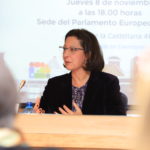
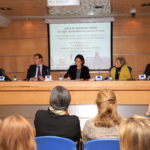
The family as the vital hub of society was the focus of an event organised by the Home Renaissance Foundation and The Family Watch at the European Parliament in Madrid on Thursday, November 8.

“Life begins in the home and the family takes first priority for the Government of Madrid,” Mr Alberto San Juan Director-General of Family and Child, told the meeting to discuss the state of the home in Spain and the rest of Europe and launch HRF’s latest book entitled ‘The Home: Multidisciplinary Reflections.’

The rising number of children diagnosed with mental illness, the instability caused by divorce, problems of adolescents being left alone while their parents are at work and the need for redistribution of tasks within the home to lessen a mother’s burden are urgency issues to address.

Mr San Juan explained that the real major concern is the low birth rate, both in Spain and throughout Europe and the reason why the Government of Madrid has invested 2,700 million euros in policies to help provide for the basic requirements of families and increase the birth rate.

Neuropsychiatrist Rafaela Santos warned of the difficulty of differentiating between wellbeing and happiness. She said that while the State can supply services that give families stability, it’s impossible for the State to make people happy.

President of The Family Watch, Javier Fernandez del Moral, highlighted the necessity of making the most of new technologies for optimum interaction and communication within the family.  He also spoke of safeguarding the family both from the public sphere and from within as the values transmitted through the home in future generations are what will keep society alive. He emphasised the need for the family to be appreciated for what it is  – a nucleus of fundamental coexistence for the human being to develop fully and with dignity.

Launch in Madrid

Launch in Madrid

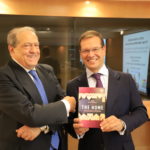
On Thursday, November 8 Home Renaissance Foundation launched its latest book ‘The Home: Multidisciplinary Reflections’ edited by Professor Emeritus Antonio Argandoña, who opened the event at the European Parliament Offices in Madrid at 6pm.

This was followed by a round table moderated by Prof. Marta Elvira of Strategic Management and People in Organziations at IESE Business School, debating whether the home is in crisis, the best way to build a well-run home and how children and other members of the family are affected by emotional instability within a home.

The round table discussions were led by:

– Rafaela Santos, Neuropsychiatrist and President of the Spanish Resilience Institute

– Alberto San Juan, Director of the Family and the Child, Government of the Community of Madrid

– Javier Fernández del Moral, Professor of Journalism and Chairman of The Family Watch


Thursday, November 8, 2018, at 6:00 p.m.

Oficina del Parlamento Europeo | Paseo de la Castellana 46, Madrid