HRF at the Spanish Parliament in Madrid | May 2019

As you know, the Day of the Family was celebrated worldwide on May 15, a date established by the UN 26 years ago in recognition of its value as a basic pillar of society.

This year the focus was on ‘Families and Climate Action’, an issue that undoubtedly affects the planet as a whole and has a negative impact, not only on the economy but also on the lives of people.

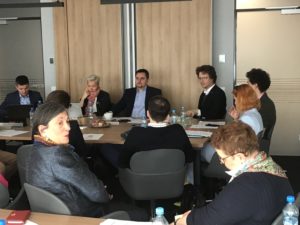
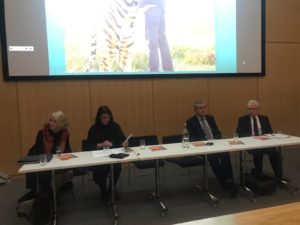
The Family Studies Institute, The Family Watch, held a roundtable on May 14 at the Spanish Parliament in Madrid, to discuss the role of the home in relation to climate change and to explain to those who legislate what practices can be carried out to mitigate this threat. Our Project and Media Manager, Angela de Miguel, participated in the debate, which drew many of the conclusions that we already reached at our International Conference on Home and Sustainability, held in London in 2011.

Without sustainable homes, there is no sustainable planet. It is essential to teach our children the importance of caring for the environment and to act as an example to them. If we do not learn to take care of our home, we will hardly take care of everything else. This planet is not just ours, it will be inherited by future generations. If we give it the value it deserves, we will take better care of it.

If one thing is clear to us at the Home Renaissance Foundation, it is the importance of a social and cultural transformation in terms of sustainability. We wish to promote change and to be catalysts through research, as we urgently need to apply sustainable practices so as not to deplete the resources offered by nature. If you want real advice or good practices to follow in your home, you can follow us on Instagram @smarthomemanagement There you will find many helpful ideas on management and home care.

Furthermore, we wish to announce our collaboration with International Federation for Family Development in the International Congress that is being organised in London in October, entitled ‘Family, the face of humanity’.  All the information is available on its website. It will be a great opportunity to see each other again and share enriching reflections on the family and its solid support to society.


What can Technology do for Older People?

Technology in housing and care for older people: what can it do for us?

All-Party Parliamentary Group on Housing and Care for Older People, Co-chaired by Lord Best and Peter Aldous MP, held at House of Lords on Monday 13th May 2019. Attended by Professor Mohamed Gamal Abdelmonem*, Patron, and Susan Peatfield, Development Director, of Home Renaissance Foundation (HRF).

Experts from health, housing, design and care agencies gave details of the specific contributions that the new technologies are making to housing and care provision for older people. Key speakers included Clare Skidmore, Strategic Lead of Housing, Learning and Improvement Network (LIN) and Ian Spero Founder of Agile Ageing Alliance (AAA).

It was clear from the presentations and subsequent discussion that there are great possibilities for improved quality of life and independence for older people offered by technological “smart” devices and home support. The questions raised made it equally clear that there is a need for “joined-up” thinking to allow these benefits to be scaled up to the level that they impact on our current housing and care crises.

Much emphasis was placed on independent living and applications allowing relatives to monitor remotely older family members living alone. The question asked on behalf of HRF concerned how much emphasis was also being placed on promoting intergenerational living and interdependence.

Claire Skidmore explained how LIN worked with Homeshare, a scheme in which an older person with a spare room is matched with a person who is in need of low-cost accommodation, in return for up to ten hours of household tasks or company per week.

Ian Spero drew attention to the AAA report “Neighbourhoods of the Future”, which has relevant sections on approaches to intergenerational living.

HRF looks forward to continuing this connection with the work of the committee at future sessions.

*At HRF Experts’ Meeting February 2019: Home in the Digital Age, Professor Abdelmonem gave a paper on “Contested Homes in the Age of the Cloud”, in which he discussed some of his work as Chair in Architecture and the Founding Director of the Centre for Architecture, Urbanism and Global Heritage (CAUGH), and co-lead of Global Heritage Research at Nottingham Trent University, with reference to housing and older people.

Handmade Homes

Launch of “The Home: Multidisciplinary Reflections” in Warsaw | April 2019

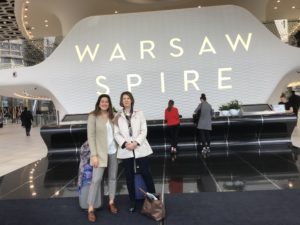
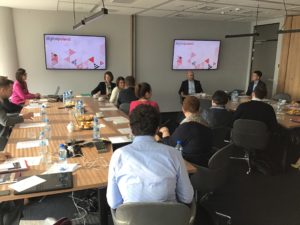
Home Renaissance Foundation had the pleasure and privilege of presenting our most recent publication The Home: Multidisciplinary Reflections as the guests of Digital Poland.  “Home in the Digital Era” saw experts, including academics, educationalists and professionals in the field of digital technology and Artificial Intelligence, gathering to discuss the challenges and opportunities these new developments offer in the context of the home.

See the booklet

Piotr Mieczkowski, CEO of Digital Poland, welcomed the participants and introduced the session by drawing attention to the “missing dimension” in digital business and development. This dimension is the social context in which individuals, families and communities interact with the new technologies. Piotr quoted just published research from the Digital Society Index that 50% of respondents to the survey are now limiting all online activity, 25% are limiting social media activity and 30% believe that there are negative health effects from digital activity. Digital Poland is at the forefront of seeking positive engagement with these social considerations, including events such as Warsaw Digital Week planned for October 2019.

Tomasz Klekowski, expert and promoter of digital transformation, Sectoral Skills Council: IT, Future Industry Platform Foundation, former Intel Director for EMEA, moderated the meeting. Tomasz set out the agenda of the sessions also referring to the effects of globalization on the changing perception of home in an increasingly peripatetic world.

Antonio Argandona, Emeritus Professor of Economics and Business Ethics at IESE Business School, University of Navarre, and editor of The Home: Multidisciplinary Reflections gave a presentation on the publication and the key strands of Home Renaissance Foundation’s work and its relevance to “Home in the Digital Era.” Professor Argandona emphasized the home as the place where cooperation between the generations is learnt and where dependence and vulnerability are not deficits but vital to this learning. Changes in patterns of employment brought about by the digital revolution of the workplace, and home-based AI need careful ethical evaluation. The commitment of Digital Poland and like-minded companies to this conversation is to be strongly recommended.


Session 1: AI, Automation and the Home

Dr Jonathan Price, Junior Research Fellow at the Aquinas Institute at the University of Oxford, began his presentation by declaring himself a “technophobe”. He argued that digital technology offers “unreliable and untrustworthy systems” in place of human beings, with emphasis on the power and reach of mobile phones into our lives. Dr Price developed his argument by describing how we are ceding control of the home and becoming locked out of the place of key human nurture. “Trust begins in well-ordered homes” and such homes require human skills and protection from damaging external sources. Historically there was a border between the home and businesses who wanted to gain access via advertising (impersonally via TV, or increasingly personally via devices such as Alexa and embedded cookies). Dr Price believes we urgently need to put this border back and to recover the true meaning of economics: “oikos”- the family, the family’s property and the home.

Dr Alek Tarkowski, sociologist, co-founder and President of Centrum Cyfrowe Foundation, responded to Dr Price’s presentation by agreeing that communication technologies not “talking fridges” are at the heart of the digital transformation of family life. The social consequences of mobile phones are yet to be seen and he too noted the speed of change in our attitudes to these devices. In the recent past the landline telephone was seen as an intrusion into the domestic scene and was kept in a separate room, now we all sit together but apart playing on our phones. Dr Tarkowski quoted Jacek Kuroń The Republic of my Grandchildren, where the future is seen as a state of wilderness and in need of a reimagining of the social contract, for the benefit of generations to come.


Session 2: Education for a Digital Future

Jowita Michalska, CEO of Digital University is concerned with teaching the competencies of the future. The premise of this priority is the likelihood that soon there will be very few jobs that will not require technology and that early exposure and confidence will be vital to success in the workplace of the future. Jowita explained how she works with children from mixed social backgrounds aged 6 – 12 giving them a creative experience of coding to help them prepare and thrive in this environment. She also highlighted the importance of helping girls overcome reluctance in this area. Children learn what technology is for and how to work collaboratively. Development of “soft skills” is seen as important alongside technical skills. The home context remains the one where moral and social values need to be modelled and worked out. Jowita agreed that this also remains a challenge.

Marta Ponikowska, lawyer, public policy analyst and leader of the Warsaw Women’s Club, picked up on the need for digital education to be collaborative and cross-curricular. There is currently a disconnect between what and how children are taught in school and the opportunities for self-learning at home via digital media. Integrity needs to be found between home and school in technology education. Marta asked how homemakers can be supported by digital education, and suggested that a framework of guidelines for schools and the opportunity for systematic training for parents was desirable. Above all there is a need for “face to face” technology.


Session 3: The Impact of New Technologies on Employment

Dr Justyna Pokojska, coordinator Jobs and Skills for the Future, Institute of Sociology, DeLAb University of Warsaw, sees the new technologies as a great, but time-limited, opportunity for women to take their place in the digital workforce. Currently, 40% of Polish women are professionally inactive. For some this is an informed choice, but for many it is about lack of access to training and the labour market. Justyna argued that professionally fulfilled women not only benefit society financially but are also more satisfied and effective in their home lives. Further, we should speak now not of “work-life” balance but “work-life blend”. Justyna concluded that for Polish women “now is our time” to take the leap into entrepreneurship and to see the new technologies as a route to inclusive opportunities.

Ignacy Święcicki, head of Digital Economy team, Polish Economic Institute, questioned the feasibility of the “work-life” blend. Culturally part-time work patterns are unpopular and women with families are more likely to be risk-averse than entrepreneurial. Linking strongly to the home context, Ignacy also questioned how simple, mundane household tasks would be fulfilled other than by domestic employees, who were very likely to be other women. It is important though for government and other relevant agencies to develop “safety nets” for those wanting to make use of this opportunity to enter the workplace.


Session 4: Homes as Connectors: Modelling Living Spaces

Krystian Kwieciński, architect, Warsaw University of Technology, returned to the theme of the home as the host for the new technologies. “The home is a huge market”, it is filled with “products” which render us “users” and “customers”. Krystian drew this out by exploring how these digital products have become residents in our homes. Some remain obvious functional tools but others are beginning to mimic human forms and behaviours, but all are sharing our homes with us. Krystian made the analogy with choosing a housemate and choosing these products; we need to choose very carefully indeed. Returning to the discussion of coding, Krystian sees it as a vital language to learn, but it will not on its own help us to discern our relationship with these technologies. He made a plea for us to be “prosumers” – professional consumers -and to be involved in the process of building our homes. To move from “buying to making”.

Dr Robert Sroka, ESG Director at Abris, began by linking to the idea of “prosumers” by asking “Are we players in this game?” In other words how much are we in control of the developments affecting us, our families and our homes? As the value of privacy has become eclipsed by the value of transparency the interests of those who sell have been prioritized over the safety of those who buy. We should see the home in the digital era from an ethical level. People need to be at the centre of any home. The pace of change should not distract us from taking the time to build strong relationships. Homes need to be places of safety and under our control. We must revisit and strengthen protection of privacy. The home has an unknown future. We need to equip ourselves to make sure we are the players in this game. We are in a transition period and in this process, we should rebuild the real sense of home.


Susan Peatfield, Development Director and Deputy CEO of Home Renaissance Foundation, offered some closing remarks encouraging a continuing conversation between those building the systems that affect our homes and those concerned with the well-being of the life and work of the home. Susan concluded by thanking Piotr Mieczkowski, CEO and Nell Przybylska, PR and Communication Manager of Digital Poland for hosting the launch and Roundtable. Thanks were also extended to all the participants and to Tomasz Klekowski, for so expertly and efficiently moderating the excellent sessions and discussion. Special thanks were extended to Marta Ponikowska for organizing the event, and to Angela de Miguel from Home Renaissance Foundation.


General Discussion Digest

 There is a concern at the speed of change and anxiety that the education system in Poland is not “fit for purpose” in addressing the needs and challenges of the digital world. Questions on how to best support understanding of these developments, both for children and their parents, recurred during the discussion.

Along with this ,there was an emphasis on preparing girls to take a full role in the digital workplace. There was some disagreement on the value of coding education for girls who preferred more traditional activities.

The opportunity for female entrepreneurship was also questioned, especially as it was not seen as a good model for healthy work-life patterns.

The different value of work outside the home and work within the home also provoked some disagreement. Some argued for a more positive vision of home-making, while others saw freedom from household chores as one of the positive outcomes of the new technologies.

How do we move from being “users” and “consumers” to being participants in the process and discerning and effecting our own points of control was also a recurring theme, as was the fear of overuse of “screen time” devices.

Building trust and confidence were seen as keys in our relationships with these developments, and continued conversation between parents and children, teachers, parents and children, digital developers and agencies representing home/family concerns are all to be sought, supported and encouraged.

“Society”: you, me, us, all

Press Release: The Home in the Digital Age | February 2019

News Digest from HRF/STI Experts’ Meeting: The Home in the Digital Age

25- 26 February 2019 The Royal Society of Medicine, London


Vision and Background

We live in in a world where technological advance and above all the astonishing pace of change is challenging many of the values and modus operandi we have long taken for granted. Much of this change coupled with the increased transparency which comes with it is undoubtedly for the good of society and especially disadvantaged minorities but equally there is no doubt that some of its use or abuse can be threatening.

Within this political and societal maelstrom the aim of Home Renaissance Foundation is to raise awareness of the home as a vital contributor to individual and social wellbeing. Our work is through research and academic meetings on current relevant trends and challenges. There can be few trends more relevant and challenging than the one identified as the focus of this current Experts’ Meeting: The Home in the Digital Age. What are the contributions – and what are the dangers – of Artificial Intelligence in our homes?

The meeting brings together world-class expertise from fields of computational logic, digital economics, sociology, philosophy of science and architecture. The discussion promises to bring light to an area often ignored by academics and the media: the Home Front.

Much attention has been given to the effects of AI on individuals and on the workplace. Far less has been written or discussed on the implications on the new technologies on the life and work of the home. The home though is truly the front line for many of these developments. HRF has been ground-breaking in raising awareness of this. The home, common to us all, is often lost in plain sight. By channeling attention to the specific context of the home HRF intends to sharpen the focus of the AI debate.

Relevant and resonant questions for the meeting and for society include:

  • How are these new technologies changing the perception of our bodies, our sense of belonging, and social relationships?
  • How can we make best use of the opportunities offered by AI and what should we protect in the context of the home and household?
  • What might be the specific benefits and the specific costs of how the new technologies can enhance children’s growth, their social integration, intergenerational relationships in the domestic environment, and the care of the elderly?

It was fully expected and encouraged that within the presentations other areas of discussion and significance would be raised. The following news digest follows the key points of each presentation and the final section offers a summary and some pointers to the next stage.

Digest

Keynote Monday 25th February: Background to HRF

Professor Sophia Aguirre, Professor of Economics in the School of Business and Economics, Catholic University of America, Washington DC, USA, outlined the background to the research element of Home Renaissance Foundation: to give status and increased understanding of the work and life of the home and to provide an evidence base to inform and influence policy and decision making at a local, national and global level.


 Session 1 AI, Automation and the Home.

Economic historian Dr Stephen Davies, Institute of Economic Affairs (IEA), London, UK,  gave a historical perspective on the anxieties associated with the new developments. Society has faced great technological shifts in the past and has found ways of adapting and making the most of them. The relevant strand from this presentation was that all discussion of the effects of AI on the labour market has focused on the workplace rather than the home context. “The home is not a central or explicit concern or topic of debate, the strengthening of the home and households and families is not an explicit goal of public policy. If it were the discussion of automation and its possible effects would have quite a different content and flavour.” This point was reinforced by Dr Davies pointing out that only since the middle of the 20th Century have individuals been seen as the economic unit rather than the family or household. Looking forward he sees a return to home working with an emphasis on those things that cannot be made by machines, alongside the prediction that 80% of  “white-collar” jobs including GPs and lawyers will be replaced by AI systems. The new era of the artisan will have many implications for the domestic sphere. Will there be a return to the pre-industrial model of home as undifferentiated economic and domestic value?


Session 2 The impact of AI on Employment.

Economist Dr Mia Mikic, United Nations Economic and Social Commission for Asia and the Pacific, Bangkok, Thailand, picked up on the strand introduced by Dr Davies that the economic impact of AI is broadly being seen as an impact on employment. In considering just 15 major developed and emerging economies the World Economic Forum predicts that frontier technological trends will lead to a net loss of over five million jobs by 2020. Dr Mikic developed a point of Dr Davies that even though many of these workers will be redeployed, the individual, familial and social upheaval of relocation, retraining and changed income levels is not factored into global forecasts and spreadsheets. Dr Mikic was keen to point out that although there are social benefits to much of the “almost intelligent” technology taking over many of the more dangerous tasks including bomb disposal, at the domestic level the benefits are harder to call. Key societal responses to the new technologies should be improving access to education in these new life-skills and ensuring inclusivity especially by encouraging women to play a full entrepreneurial role in the digital economy.

Dr Joy Malala, Strathmore University, Nairobi, Kenya, responded to this by drawing attention to the experience of Kenyans who have been enfranchised by the new “hand-held” technology that does not depend on a national infrastructure. The mobile revolution has put financial planning and educational opportunities literally into the hands of Kenyan householders. “99% of the population does not have a bank account, but they do have a phone.”


Session 3 Digital Home: The Missing Element for a People-centered Digital Future.

Technology pioneer  Mei Lin Fung, People-Centered Internet, World Economic Forum, shared statistics on the scale of our digital progress (e-addresses being contained in something the size of a beachball to now, exponentially, something the size of our sun) and placed them firmly in the context of their implications for our shared future: “We are at the 50/50 moment when half the world is connected to the internet. What happens when the other half come on line is in our hands. We have the opportunity to prioritize home and family above work – and still live well.” Mei- Lin drew parallels with the pioneer families in the early days of the American West taking wagons across unknown and dangerous land with the journey we are on as a society on the digital frontier. She urged us to remember that on those wagons, along with food and arms, they also took pianos. We need to have on board the things that build good homes and lives. “Understanding what the Digital Home could be- a safe, welcoming and happy place where people together expand their social and economic activities…is an important endeavour.” “The home is the custodian of what is shared and what is private. The node that connects and protects wider communities.” Mei Lin concluded with a call for a “Renaissance in research about the home for humanity.” We need a seat at the table and a piano on the wagon.

Deborah Gale, Global Institute of Experienced Entrepreneurship, co-author of the presentation added her plea for active participation and leadership in the regulation and planning for the digital future. This was echoed by Lord Best responding to the question “Is the internet too big and too disparate for regulation?” and calling for urgent engagement in providing good regulatory guidance and safeguards. A point developed by Professor Sonia Livingstone in her keynote presentation. (See below.)


Session 4 Contested Homes in the Age of the Cloud.

Professor Gamal Abdelmonem, Chair in Architecture and the Director of the Centre for Architecture, Urbanism and Global Heritage, Nottingham Trent University, UK, addressed one of the key questions of the meeting: how are these new technologies changing the perception of our bodies, our sense of belonging, and social relationships. Two fundamental changes are affecting the life of the home, 1) the increasing number of older people as percentage of population in the UK and Europe, 2) the increasing encroachment of technologies in the way homes operate on a daily basis. Smart homes for the elderly need to address the actual concerns of older people not only their carers. Issues of safety and security are important, but so, argues Professor Abdelmonem, are fears of social isolation and lack of privacy.  He also noted the changes to private and public spaces and contexts; these shift relative to the size and activity of the home. Private/personal space can now be achieved by plugging in to the digital world, creating isolation in formerly shared space. The challenge is for “homes of the 21st Century where work, care and emotional support are contesting the very nature of socio-spatial patterns of the domestic space….To be sustainable and central to family living.” Home planning for all generations needs to recognize the shifting demographic and private/public domains and to “Revisit [the home’s] roles as private spaces, and integrate technologies that are family friendly with clear ethical and moral principles.” Human values must underlie digital development.


Session 5 Homes as Human Robot Ecologies:An Epistemological Inquiry on the “Domestication” of Robots

Professor Luisa Damiano, Logic and Philosophy of Science, University of Messina, Italy, explored how the notion of “domestic robots” has moved from science fiction to frontier research. As with Professor Abdelmonem, Professor Damiano’s focus was on how human needs and behaviours need to be integrated with these developments – not teaching humans how to be with robots but making robots that genuinely benefit humans in domestic contexts. The so-called “peer-to-peer” interaction skills of robots in a wide range of home-based care and work tasks from cleaning to baby-sitting “promises a considerable transformation of humans’ domesticity, and more in general, way of living.”  Like earlier speakers Professor Damiano advocated the urgency of a specific ethical reflection on these developments. “Instead of prioritizing the inclusion of robots into domestic environments by enhancing their networks of [robot-robot] relations, to favour the design of robots as “social connectors”: prioritizing the goal of empowering human-human relations inside and outside domestic environments.”

Dr Ioana Ocnarescu, Design Researcher at Strate School of Design, Paris, France, responded by perfectly illustrating Dr Damiano’s argument with examples from the robot design perspective. Designers are most often approached once the robot has been created and are asked to optimize its use. This, Dr Ocnarescu argues, is the wrong way round. Designers are best-placed to be a part of the process from the beginning to ensure that the robot fits human needs rather than humans learning to fit in with the robot.(Video link to be found at:https://vimeo.com/128873380)


Keynote Tuesday 26th February: Digital Families: Grand Hopes, Growing Fears, Everyday Struggles.

Professor Sonia Livingstone OBE FBA, Professor of Social Psychology in the Department of Media and Communications London School of Economics (LSE), UK, presented relevant aspects of her work with Alicia Blum-Ross on Parenting for a Digital Future. This directly addressed the key question: What might be the specific benefits and the specific costs of how the new technologies can enhance children’s growth, their social integration, intergenerational relationships in the domestic environment? Professor Livingstone established that 5 in 6 of all parents use digital technologies for parenting. She outlined some of the mixed messages both parents and children are receiving about the new technologies. On one hand they are encouraged to prepare for a digital future, on the other hand they are bombarded with scare stories about excessive screen time and internet dangers. Future-proofing or brain-washing? Negotiating a path through this new terrain causes tension within the home and relationships. Parents feel disconnected from their children and each other and it is hard for them to gain advice in managing these new conflicts. Professor Livingstone’s own research suggests that many of the fears about screen time and access are not borne out in evidence. Gaining digital confidence, learning about coding from an early age should equip children for the new world. How far though does this increase the disconnect between parents and their children in the shared space of the home? Bearing in mind some social class distinctions found in the research, what are the shared values which we can encourage for all families, not just “the Geeks”? What does digital citizenship look like in the domestic context? What does need to be addressed is the age at which children become digitally active. This led to a return to the discussion concerning regulation and safe-guarding. It is clear that governments find themselves on the back foot in attempting to regulate something which is moving so fast and will only move faster in the future. It is also clear that any regulation or education plan needs to consider the whole family dynamic and needs.


Session 6: AI Empowered Technology in the Home.

Professor Francesca Toni, Professor in Computational Logic in the Department of Computing, Imperial College London, UK, and the founder and leader of the CLArg (Computational Logic and Argumentation) research group, picked up on a theme of the meeting, that these technologies although evolving fast still have a long way to go. Professor Toni’s perspective suggests that there is still time and opportunity to make these new technologies work for and not against human social needs. The commercial developments that we see in place now aim to identify and optimize human activities. Currently “Connected Homes” are seen as places where control of energy consumption and security are managed either remotely or centrally by householders. There is not yet much available that engages directly with social connection facilitated by AI within the home between family/household members. This is an area where conversation between those working in the field of AI, scientific and commercial, and those concerned with policy making is vital.


Summary

How are these new technologies changing the perception of our bodies, our sense of belonging, and social relationships?

Addressed by Professors Gamal Abdelmonem, Luisa Damiano, Sonia Livingstone, Francesca Toni and by Mei Lin Fung, and by respondents, Homayoun Alemi FRIBA, Dr Ioana Ocnarescu and Professor Matilde Santos, Professor in System Engineering and Automatic Control, University Complutense of Madrid, Spain.

Key strands

  •  Many of these technologies are still at an early stage and evidence is still unclear as to the direct effect on the perception of our bodies, our sense of belonging, and social relationships.
  • Evidence we do have shows that the line between the private and the public is shifting and affecting the groups we feel we belong to. Questions concerning individual privacy are dominating the discussion of digital access, while more important shared concerns are less well-represented.
  • There is intergenerational tension in social relationships where use/overuse/inappropriate use of digital technology is perceived.


How can we make best use of the opportunities offered by AI and what should we protect in the context of the home and household?

Addressed by all participants already cited and including respondent Dr Gloria Pasadilla, Partner and Business Director of Leadership Design Pte, Ltd, Singapore.

Key strands

  • No one is currently raising the home context in the forums of AI and digital technologies. There needs to be “space at the table” for those concerned with these issues to engage with those making the decisions which reach into our homes.
  • The speed of development requires an urgent engagement with the ethical and social implications of the digital frontier and the prioritizing of human-human connection over human-robot connection.
  • Regulation, “trust-gates” and “gate-keepers” and firm ethical guidelines need to be integrated, and develop alongside with all technologies affecting the domestic context.
  • More research needed to see how the next generation of AI will impact on the home.


What might be the specific benefits and the specific costs of how the new technologies can enhance children’s growth, their social integration, intergenerational relationships in the domestic environment, and the care of the elderly?

Addressed by Professors Gamal Abdelmonem, Luisa Damiano, Sonia Livingstone, Francesca Toni and by Mei Lin Fung, and by respondents, Homayoun Alemi FRIBA, Dr Ioana Ocnarescu and Professor Matilde Santos, Professor in System Engineering and Automatic Control, University Complutense of Madrid, Spain.

Key Strands

  • There are clear benefits to children’s individual access to education and employment from digital technology. There is an impact on relationships within the home but these often arise from intergenerational tensions around amount of time children spend on screen and parental lack of knowledge/confidence on how to manage this.
  • There are clear benefits to the elderly from technologies designed to improve their security, safety, health and independence at home. There must be an awareness that many of these technologies are designed for the benefit of carers/relatives rather than the older person. Aim to work with rather than for the elderly to develop next stage of “care” technology.
  • There is no indication of the intergenerational benefits of AI being addressed or developed as key requirements or needs. That is in terms of communication, mutual nurturing, or intergenerational living.


Indicators for Future Actions/Engagement

  • No one is currently raising the home context in the forums of AI and digital technologies. There needs to be a “seat at the table” for those concerned with these issues to engage with those making the decisions which reach into our homes.
  • Construction of a framework and content of support and guidelines for parents and carers, and access to this, needs to be developed in the context of all who share the home.
  • More research is needed on the costs/benefits of the new technologies to the home.
  • There is no indication of the intergenerational benefits of AI being addressed or developed as key requirements or needs. That is in terms of communication, mutual nurturing, or intergenerational living.
  • There was little mention of any specifics in terms of ethical principles or guidelines to inform the above actions and engagements. This is clearly an area for further and detailed discussion.


Launch of our latest book in Nottingham | March 2019

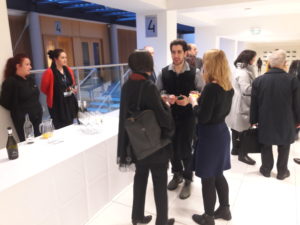
Home Renaissance Foundation was delighted to be the guest of Professor Gamal Abdelmonem, Chair in Architecture and Director of the Centre for Architecture, Urbanism and Global Heritage (CAUGH) at Nottingham Trent University, for the launch of The Home: Multidisciplinary Reflections, published by Edward Elgar 2018.

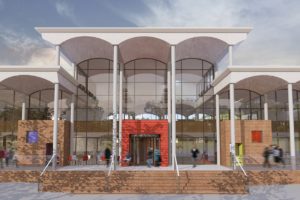
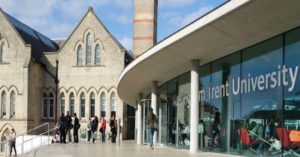
The fine buildings of Nottingham Trent University, the perfect marriage of old and new architectural styles, reflect the impressive achievements of the university and provided a very welcoming and appropriate context for the launch on Thursday evening. The invited audience included academics and students from a range of disciplines, along with professional architects.

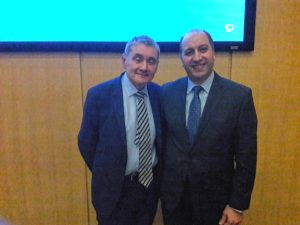
The keynote presentation of the evening on “Wellbeing and Social Environment” was given by Professor Sir Harry Burns, Director of Global Public Health at Strathclyde University. Sir Harry Burns is also Chair of the Centre for Health Policy and of the Scottish Government’s Review into Targets for Health and Social Care. He was Chief Medical Officer for Scotland until 2014.

Professor Antonio Argandona,  Emeritus Professor of Economics and Business Ethics, Chair of Corporate Social Responsibility at IESE, Business School, University of Navarra and editor of The Home: Multidisciplinary Reflections presented the content and significance of the publication.

They were joined on the panel by Tricia Akers RIBA, Director and Owner of Allan Joyce Architects, and Julie Richards RIBA, Director and Owner of Julie Richards Architectural Design Limited. Both architects work in the Nottingham area and have a wide experience of creating many different kinds of homes, from luxury residences to social housing and care homes. Julie Richards also gave a helpful introduction to some of the questions and considerations to be used in the design process.

Professor Abdelmonem introduced each of the guest speakers and panellists, making valuable links between the world of architecture and the wider implications of home and housing decisions for the whole of society.

HRF Chairman Bryan Sanderson CBE began the evening by emphasising the importance of a multidisciplinary approach to discussion of the home. Voices from the worlds of architecture, medicine, education and law need to contribute to this critically important subject. The role of Home Renaissance Foundation as an International Think Tank is to provide a space and a platform for these voices to be heard.

Professor Antonio Argandona continued this theme in his presentation on The Home: Multidisciplinary Reflections. There is strong societal need for a catalyst for change. Beneficial changes in our communities and workplaces begin in the home. This requires both the willingness of the individual to behave in such a way as to support other members of the household and for policy makers to support individuals in doing this. Professor Argandona spoke of a society where “home overflows”. He ended with the readiness needed in the home context to “fry a shirt or iron an egg”, in other words to see and live our individual and collective responsibility to each other.

Professor Sir Harry Burns speaking on “Wellbeing and Social Environment” was also very concerned about how the “home overflows” in to later life outcomes for individuals as well as wider society: “The circumstances in which we are born, grow and live shape the outcomes we experience.” Speaking from his personal experience as a surgeon, and illustrated by data from a wide range of studies, Sir Harry described the devastating damage that stems from living in homes where family members suffer chronic stress, most often as a result of poverty. This overflows into poor educational and health outcomes and poor choices and behaviours. Developing his discussion to “what causes wellness” Sir Harry saw a causal link between people having more control of their social environment and improved quality of life. “Ask people what they need”, “Think, Yes” are attitudes required from those in charge of public policy and resources to make the difference. Building hope, confidence and a “sense of coherence” in those most at risk in our society is the most important building we can do.

The panellists took up these strands of how the built environment can help create more positive social environments. Key is to build places that allow people to come together, and to understand the needs of the people using the space. Tricia Akers and Julie Richards explained how important the client consultation phase of any project should be. Sir Harry Burns stressed that this phase also needs to be given priority when social and community projects are under discussion.

Questions from the floor included a plea for all those studying and working in the field of architecture to engage with these issues.

Professor Abdelmonem closed this very successful and enjoyable session with renewed thanks to all those contributing to the launch of The Home: Multidisciplinary Reflections.

HRF Seminar and Book Launch: “The Home: Multidisciplinary Reflections” at Nottingham Trent University was organised in partnership with the Royal Institute of British Architects (RIBA)-East Midlands and the Nottingham Trent Architectural Society

Pogramme and participants

Thursday, March 14, 2019, at 6:00 p.m.

Newton Building, Lecture Theatre 4, City Campus, Nottingham Trent University, Nottingham

Experts Meeting Programme

London Experts Meeting: The Home in the Digital Age

The Royal Society of Medicine, 1 Wimpole St, Marylebone, London W1G 0AE


Meeting Timetable: Monday February 25th, 2019

9:30    Registration. Coffee & Pastries

10:00-10:10   Welcoming  Address  by Bryan Sanderson CBE, HRF Chairman & Tracey O’Donnell, STI

10:10-10:45   Keynote and Q&A: HRF context and background

Professor Sophia Aguirre, HRF Director

Q& A facilitator: Bryan Sanderson CBE

10:50-12:10   Session 1:  Automation, AI, the Home and Work

Moderator: Bryan Sanderson CBE

  • Presentation by Dr. Stephen Davies. Institute of Economic Affairs (IEA), UK
  • Response by Professor Sophia Aguirre. Catholic University of America. Washington DC
  • Discussion by all participants (presenters and respondents)

12:15-13:45    Lunch & Coffee,  Royal Society of Medicine Restaurant.

14:00 -15:20  Session 2:  The impact of A.I. on employment and other areas

Moderator: Professor Antonio Argandona

  • Presentation by Dr.Mia Mikic. United Nations Economic and Social Commission for Asia and the Pacific (UNESCAP)
  • Response by Dr. Joy Malala. Strathmore University. Nairobi
  • Discussion by all participants (presenters and respondents)

15:25-16:45   Session 3: Digital Home. The Missing Element for a People-Centered Digital Future

Moderator: Lord Best

  • Presentation by Mei-Lin Fung. People-Centered Internet. World Economic Forum
  • Response by Dr. Gloria O. Pasadilla. Leadership Design Pte, Ltd. Singapore
  • Discussion by all participants (presenters and respondents)


Meeting Timetable. Tuesday February 26th, 2019

9:30   Coffee & Pastries

10:00-11:20   Session 4: Contested Homes in the Age of the Cloud

Moderator: Bryan Sanderson CBE

  • Presentation by Professor Gamal Abdelmonem. Nottingham Trent University.UK
  • Response by Homayoun Alemi. RIBA
  • Discussion by all participants (presenters and respondents)

11:25-12:45  Session 5: Homes as human-robot ecologies. An epistemological inquiry on the “domestication” of robots

 Moderator: Professor Marta Bertolaso

  • Presentation by Professor Luisa Damiano. University of Messina. Italy
  • Response by Dr. Ioana Ocnarescu. Strate Ecole de Design. Paris.
  • Discussion by all participants (presenters and respondents)

13:00-14:30    Lunch & Coffee, Royal Society of Medicine Restaurant.

14:45-15:30   Keynote and Q&A: Digital Families: Grand Hopes, Growing Fears, Everyday Struggles

Professor Sonia Livingstone. LSE. London

Q&A Facilitator: Professor Rosa Lastra

15:40-17:00   Session 6: Survey on AI for the home and society at large

Moderator: Dr. Maria Tomas

  • Presentation by Professor Francesca Toni. Imperial College.UK
  • Response by Professor Matilde Santos. Universidad Complutense de Madrid. Spain.
  • Discussion by all participants (presenters and respondents)

17:00-17:15   Closing Remarks from Bryan Sanderson CBE & Professor Rosa Lastra

3rd Experts Meeting: The Home in the Digital Age | February 2019

The Home in the Digital Age | Home Renaissance Foundation Expert’s Meeting
London 25-26 February 2019 | At The Royal Society of Medicine, London

Home Renaissance Foundation in partnership with the Social Trends Institute hosts a gathering or world-leading academics on the field of AI and digital technologies to discuss the impact of these developments on the life and work of the home.

Professor Sonia Livingstone OBE FBE from LSE will address the challenges to families in: Grand Hopes, Growing Fears, Everyday Struggles.

Contributions will be heard from key experts in the areas of sociology, philosophy of science, computational logic, economics and architecture:

Mei-Lin Fung, People Centered Internet, World Economic Forum

Professor Francesca Toni, Leader of Computational Logic and Argumentation, Imperial College, London

Mia Mikic, Director at Trade, Investment and Innovation Division, United Nations ESCAP, Bangkok

Dr Stephen Davies, Head of Education at the Institute of Economic Affairs, London

Professor Luisa Damiano, Department of Ancient and Modern Civilizations, University of Messina

Professor Gamal Abdelmonem, Director of the Centre for Architecture at Nottingham Trent University


To book a place to report on this event please contact Susan Peatfield:
susan@homerenaissancefoundation.com and follow us on Twitter: @HRFLondon

The Home in the Digital Age: The future of our daily lives

It is a truism that when things are too close we stop being able to see them. Nothing is closer to us than the places we wake up in each morning and return to each night. It is likely though that – in another saying – “familiarity breeds contempt” and though we may need to notice a new IT system at work we can be slow to pick up the changes and challenges that are right under our noses at home.

Over the past few weeks, we have suggested ways in which the new technologies impact on our daily lives. We have looked at the gathering storm clouds of the irresponsible activities of some social media sites, and the dangers to children and vulnerable young people. We have touched on the very real benefits robotics offers to the care of the elderly and those socially isolated. We have also tried to show how a multidisciplinary approach to these threats and promises is vital.

Just considering scientific applications loses the domestic context. The home. The home, as HRF has established, is “a complex field”.  Again, it is because it is so close to us that we can fail to recognize this. No two homes are alike but we all come from and go home to one. The personal and social implications of anything that impacts on the home go wide and deep.

It is for this reason that a team of experts from across the academic disciplines is meeting at the Royal Society of Medicine next week to discuss “The Home in the Digital Age.”

Sonia Livingstone OBE FBA, Professor of Social Psychology at the LSE, will give the keynote presentation on Digital Families: grand hopes, growing fears and everyday struggles. Francesca Toni, Professor of Computational Logic at Imperial, London will give a scientific perspective and survey of AI technologies being developed for the home. From the world of economics, Dr Stephen Davies of the Institute of Economic Affairs, Mei Lin Fung of the World Forum, and Dr Mia Mikic of UNESCAP will look at relevant strands from their own global perspectives. Professor Luisa Damiano brings insights from her work in Logic and the Philosophy of Science, and Professor Mohamed Gamal Abdelmonem his from his work as Director of the Centre for Architecture, Urbanism and Global Heritage at Nottingham Trent University.

Along with their respondents and other invited experts, these academics will make the level of discussion very significant indeed. All further details of the meeting and speakers are available on our website. We very much look forward to sharing soon the content and outcomes of “The Home in the Digital Age”, and all it offers to this debate – for today and for tomorrow in your home and in mine.