New Patron at HRF

We are delighted to announce that Home Renaissance Foundation has a new Patron.

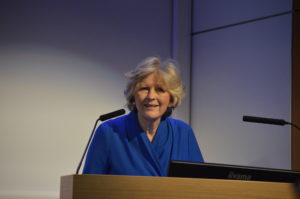
Sheila the Baroness Hollins will join our Board of Patrons. After participating in our 4th International and Interdisciplinary Conference last November with a thought-provoking speech about the importance of the home for family members´ mental health, she has accepted our invitation.

She will take the place that sadly Mr. Peter Sutherland left following his death. Baroness Hollins is keen to be a part of Home Renaissance Foundation for the following reasons:

“Home comes in many different shapes and sizes but whoever we are and wherever we live, we need our home to be the place where we feel safest. That’s not always possible for reasons of finance or family turmoil or because a disabled person is deemed too needy to be supported at home. My life’s work has revolved around trying to implement the principles of the Ordinary Life movement for people with learning disabilities, that each person is entitled to an ordinary life in an ordinary house in an ordinary street with the support that they may need to be able to live safely and fully. Such support must include home making- a skill rarely found amongst the repertoire of direct support staff/ carers who are working in the community.”

Here at HRF we are very grateful to have Baroness Hollins with us and we intend to keep learning and researching into this challenging approach to the home.

For more information about her career and the focus of her work please click here.

Our book is already on sale

What is HRF?

The United Nations Report

In 2016 HRF launched the Global Home Index research project with the aim of finding out what people think about the work required to run a home. It was a challenging project managing a survey that countries throughout the world could take part in and we gained a real insight into how the work of the home is perceived across the globe.

We allied ourselves with strong academic institutions in research and dissemination, which in turn involved a great deal more partners to analyse the huge amount of data. Our joint efforts finally bore fruit and throughout 2017 we were able to present the results of this global research in more than 20 different countries.

Today we are very happy to announce that the Global Home Index has gained formal recognition by the UN and been included in their list of activities over the past year presented to the Secretary-General. We are delighted that an institution of this standing deliberates and takes notice of our work. We are happy and grateful and may we continue to grow from strength to strength in our forthcoming projects.

Thanks also to all those who participated because without your time and effort this would not have been possible. Here is the United Nations report.


Feel good food

Chairman´s Message

New family dynamics – the advent of the Granny nanny

HRF launches the Homemakers Project at IESE Business School | May 2014

Home Renaissance Foundation’s panel began with an introduction by HRF Director Julia Prats within the framework of sociologist Zygmunt Bauman’s statement: “There should be some legal, social and economic framework which would allow people to choose working at home as a profession”. Julia Prats introduced the challenge faced by companies when an employer sees in his or her workers an inability to tackle problems at work, which could be linked to their childhood upbringing at home.  

Marc Grau, sociologist and researcher at the University of Edinburgh, made reference first to the feeling of guilt experienced by many women, and how the battle for a more balanced life consists of being responsible in the spheres of both one’s working and personal life. Mr Grau expressed that we are experiencing a paradigm shift from the male bread-winner role into a more ‘intimate father’.  

Mey Zamora declared that she is proud of being a homemaker and said that all those who work at home should feel proud as well, stating: “we play in a premier league team”. Mrs Zamora, after beautifully describing how the house is the point of reference in the world, concluded that taking care of the home ultimately means being able to create the best conditions for a good quality of life.  

Psychiatrist Joan de Dou utilised his expertise to examine the inconsistency between the personal and family values that people possess, and the extent to which the gap between the two can cause unhappiness. The sense of guilt which comes from comparing ourselves to one another is for some women an obstacle to happiness. In his consultancy work Mr de Dou carries out cognitive behavioural therapy which is based on the acceptance of and commitment to everything that you undertake in your life. He affirmed that the values that we carry have the greatest impact on the child’s educational training, based on the concept of ‘transferrable language’, one of the theories of Dr Paulino Castells, another psychiatrist who has researched the matter.  

The panel continued with a second participation by Marc Grau, who talked about the important mission of the Public Administration on this matter. He praised the Norwegian model and the two criteria behind its policy: the children’s best interest and the right to choose whether or not to stayat home. He also commended the French model on family-friendly policy.  

Joan de Dou brought the panel’s deliberations to an end, remarking that our current tendency for workaholism could be rooted on escapism. The psychotherapy that he undertakes is based on three values: self-control, transcendental motives and solidarity. As he said, all of these values can be attained with the work that a homemaker undertakes at home.  

Mercedes Jaureguibeitia , CEO of Home Renaissance Foundation who travelled especially from London to be at the event, said that already good ties have been strengthened with IESE Business School, leading to a highly beneficial dialogue between the leading management school in Spain and Home Renaissance Foundation. IESE is the second highest ranking Executive Business School in the world according to the Financial Times 2013 Executive Education listing.  

A special thanks to Nuria Chinchilla, Director of the International Center for Work and Family, on the organisation of the event. 

“Grandparents who care for their grandchildren live longer”, says Renata Kaczmarska of the UN Department

4th HRF Conference 2017 | A Home: a place of growth, care and wellbeing

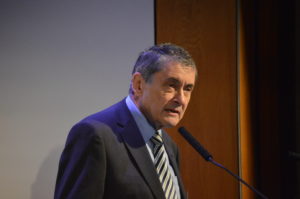
The Home Renaissance Foundation held its 4th International and Interdisciplinary Conference on 16-17 November in London. The event aimed to discuss the vital role of the home in health and wellbeing, both for individuals and for society as a whole.

Participants from more than 15 countries gathered at the prestigious Royal Society of Medicine to discuss a variety of topics which ranged from the benefits of inter-generational interaction in the home to the power of healthcare professionals to promote healthy behaviour in their patients.

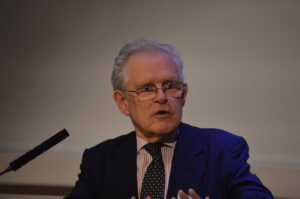
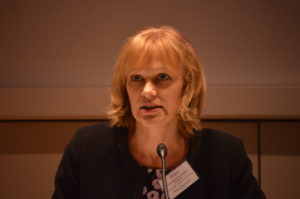
Noted speakers included Sir Harry Burns who spoke of the importance of a nurturing family as the basis for a successful life, and Baroness Sheila Hollins who emphasized the need to change paternalistic attitudes towards people with learning disabilities as “it’s fundamental that we all have a right to a family life and this includes children and adults with developmental learning difficulties”.

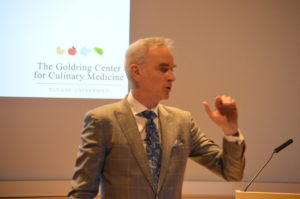
Professor Elizabeth Robb OBE gave an insightful talk on the importance of healthy family relationships as the foundation for a stable life, as “relationship education is incredibly important to prevent cycles of aggressive and violent behaviour”. Dr Timothy S. Harlan (Dr. Gourmet) from the USA emphasised the benefits of a Mediterranean diet and the advantages of preparing healthy food at home. Renata Kaczmarska of the UN Department of Economic and Social Affairs addressed the impact of family policies and the need to support parents in the home, including the thought-provoking finding that “grandparents who help care for their grandchildren have a 30% lower risk of mortality and better physical health than those who do not participate in giving care”.

These matters are especially relevant in a world that has seen rapid change and an increasing prevalence of mental health issues. Despite the great variety of topics discussed, a common theme emerged: the importance of a stable, safe home that provides emotional support, empathy and respect. The home is not simply the physical space where we live, but a complex concept that has an incalculable impact on our physical and emotional health and on society as a whole. A home should be safe, nurturing and valued, and governments have a huge responsibility to implement policies that support this.

Press Contact: 
Media Contact: Ángela de Miguel
Email: press@homerenaissancefoundation.org
Telephone: + 44 020 7490 3296
Video