Home in the Time of Coronavirus
The Value of Home Work
Intergenerational Care in the time of Covid-19
Beating the Virus
Having someone with an intellectual disability or an autistic child at home during coronavirus is a real blessing and an invitation to spend our days more mindfully but creating a new shared rhythm may take families like mine a little longer. Beyond Words, the charity I founded and chair, has been busy producing some wordless booklets which may help with ideas!
The BW method relies on the power of stories to help people understand and for people who understand pictures better than words, then that narrative has to be in pictures.
Truthful Stories in pictures empower people – Before lockdown, my son was very unwell with what could have been flu or Covid-19. He was scared, he didn’t understand about covering his cough or self-isolating. He didn’t understand the importance of drinking lots of fluids. We didn’t have an existing story about a virus, so we asked the artist of an existing book called Belonging to create a new episode involving its two much-loved characters – Kali and Stefan.
In Beating the Virus, Kali develops symptoms of Covid-19. NHS111 advises her to stay home and to drink lots of fluids. She rings Stefan who brings some essential supplies and models how to keep his distance. Kali recovers.
Beating the Virus has already been downloaded 2000 times across Europe- of course being wordless it’s not language dependent, although it does include advice for carers at the end.
But there is another more widespread challenge. How to explain the stay home, stay safe message.
My son challenged me- you can’t tell me to stay at home. I have to go to the bank, the shop, my cafe – I want to see my friends, and so on and of course, we want him to make his own choices, but those choices are not his to make just now. We had a couple of bad days, but soon things settled into a new peaceful pattern of mainly good days.
We have pulled together a second wordless booklet called ‘Good days and bad days during Lockdown’ by collating short stories from existing books. The aim is to help think about how it feels to be isolated and frustrated and how to manage disappointment and lost opportunities- my camp has been cancelled; my birthday party is now online. And more importantly to have fun thinking about other ways to live at the moment.
For my son this includes a virtual bookclub using zoom with the images being shared online just as we are today; a daily colouring session with a friend using facetime; an online dance class with dance syndrome and lots of WhatsApp calls to friends and family.
Both of the booklets can be downloaded free from www.booksbeyondwords.co.uk
We hope that readers won’t need our third booklet which is aimed at family carers facing death of a family member because of coronavirus either at home or in hospital. This is illustrated but aimed at carers, not directly for people who struggle with words. But it does include links to our very truthful wordless stories about death and dying: When Mum Died, When Dad Died, When Somebody Dies and Am I Going to Die?
How does the Internet affect our lives?
The participants are now all confirmed
As you all know, we are organising our 5th International Conference on Happiness and Homes which will be held in November at The Royal Society of Medicine in London. Happy Homes, Happy Society? The contribution of domestic life in a time of social changes, offers a great opportunity to explore the contribution of the home to the wellbeing and happiness of individuals at all stages of life and, by implication, to wider society.
We are delighted to announce that the participants for this meeting are now all confirmed. A prestigious group of academics will be contributing to our event, as keynotes, academics in dialogue and as round tables experts.
KEYNOTES & ACADEMICS IN DIALOGUE

ROUND TABLES
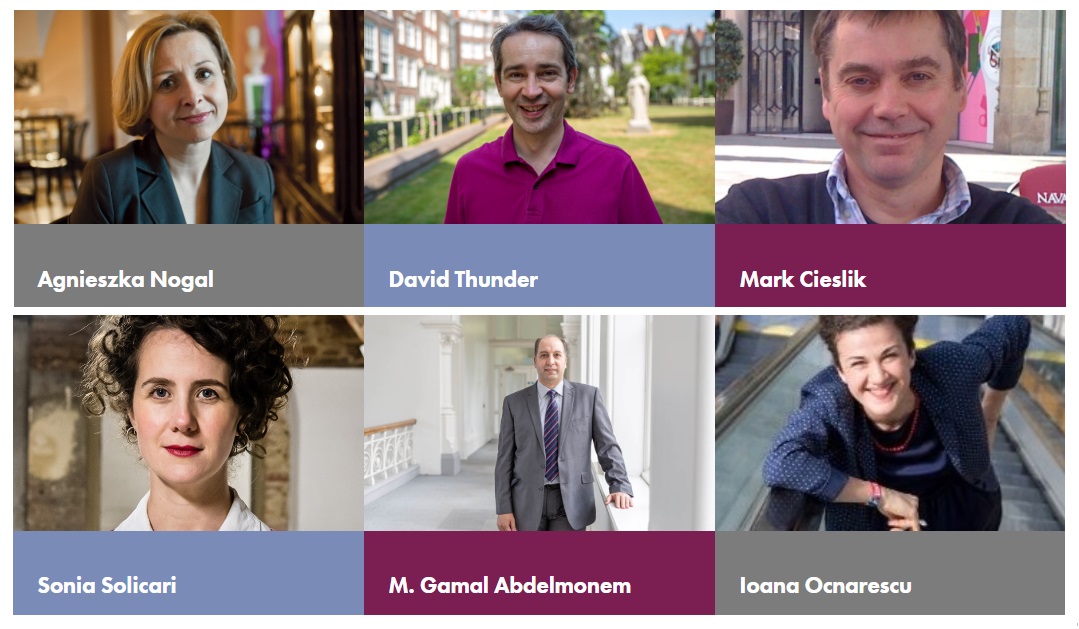
Clicking on the relevant image will take you to their CV and more details.
Please note that the Proposal Submission Deadline of 30th April is fast approaching. We have already received some very promising proposals from the UK and international academics. If you plan to contribute but have not yet sent your abstract, please send it to research@homerenaissancefoundation.org
Beyond Words
Staying at Home
The advent of the coronavirus and the steps we are advised to take to control it have thrown into sharp focus the vital but often ignored core of our lives: our homes. “Stay at home” “Work from home” “Self- isolate – at home”, is the advice on every website and every one’s lips.
How this advice is greeted depends very much on the homes involved and our feelings about them. For some of us this is a dream come true. It offers the chance to jump off the activity-driven treadmill of our working lives and to spend some time back in the “nest”. To finally take down those unread books on our shelves, curl up in a favourite armchair and make the most of this unplanned holiday from the “normal”. Or perhaps it’s chance to get into the garden, or tidy the attic, write that novel or phone those old friends we kept promising we would? This response comes from the sense of home as a place of welcome retreat, well-resourced for our needs day by day, and especially in times such as these.
For some of us though, the thought of having to spend a fortnight – or forty nights – at home, is one of dread. Or, if not dread, then at least a kind of claustrophobia or “cabin fever”. (It is worth noting here that no one has suggested actual home- imprisonment, so driving the car, walking in the park, as long as we are feeling well, remain sensible distractions.) For this group, life is definitely elsewhere – at work, out with friends or colleagues. Home is less a place of sanctuary and more a place we are all too ready to leave each day.
Some of the differences in response are down to our personalities and our personal circumstances. For somebody living alone, self-isolation might feel like a sentence to solitary confinement. For a parent of lively children the prospect of the schools closing and extended “home-time” might not initially make his or her heart leap with joy.
Some of the differences are economic and geographic. If I live in a leafy suburb, close to shops, in a house in good structural and decorative order, I am more likely to see my home as a retreat than if I find myself facing housing challenges in a more deprived or remote area.
What is transformational for both groups is the quality of our relationships inside and outside the home. A person living alone but able to rely on the ‘phone calls and practical support of family, friends and neighbours can be confident that they will not be forgotten. A family used to their own space and activities may find that semi-enforced time together presents more tensions than usual. For this reason, the evergreen virtues of patience, fortitude and charity in the home are never more clearly needed than now.
The following Ten Tips on how to face being at home are a useful corrective to some of the more gloomy offerings available, however we might feel about “Staying at Home”:
- Optimism – characterised by good humour and hope.
- Routine – giving an ordinary pattern to these extraordinary days is both calming and productive.
- Don’t kill time – use it and avoid the obvious timewasters found online.
- Learn something new -you might not feel like it, but it can be a very welcome distraction to set about learning a new skill.
- Practise hobbies – now is the time to revisit the things you enjoy but for which you never seem to have the time.
- Take some time for quiet – turn off the news and the noise and spend some time noticing what is good in your life and what, in spite of all the anxiet, you are grateful for today.
- Good conversations – take time to have a deeper conversation with loved ones. Maybe some real catching up is needed with those with whom we share our lives?
- Support others – offering emotional and practical support to those who are struggling is not only helpful to them but also gives us a bigger picture to focus on.
- Keep calm – easier said than done, but if you are exercising points 1–8 above, it will be easier.
- Forgiveness – living together in these new conditions is complicated, be ready to offer and accept apologies when things do not run smoothly in our relationships.
Once things return to “normal” it may be that we have developed a stronger understanding of what we want and need our homes to be. In the meantime, let us make the most of this time and the homes we find ourselves spending it in.
March 20th, International Day of Happiness
Why do good things always happen to certain people?
The answer is very simple and it is not just about luck. According to Dr. Marian Rojas, it is because of how they react and interpret what happens to them. Happiness is not about what happens to us, but how we experience what happens to us. Good or bad, there are people who always see it as an opportunity. Their brain is predisposed to this way of thinking.
In 2019, a best-selling book in Spanish was How do you make good things happen to you? written by psychiatrist Marian Rojas Estapé. She talks about happiness from the point of view of psychiatry and believes that there are three factors that determine our way of acting:
1. Our belief system. We all have a series of beliefs in which we have been educated. In our homes, we have seen how our parents react to problems and this can limit us when facing issues.
2. Our state of mind. Your best or worst version depends on your mood. Depending on how I am, receiving good or bad news has more or less of an impact. If one is usually in a good mood, all bad news is less bad. If one is always angry or feeling burdened, good news is less good and bad news can appear worse.
3. ‘The ascending activating system’. This system is located in the brain stem and filters what it receives from reality, capturing only what our brain is interested in. For example, a pregnant woman may only focus on pregnant women in the street and an injured person only notice people on crutches… There is a famous phrase that goes: “What the heart really wants, the mind ends up showing you.”
According to Dr. Rojas, we live in a very advanced but very sick society. In fact, 20% of the population is on medication for mood issues. And this is because we live in a constant state of alert. This scientifically has a very important consequence: we generate so much cortisol that causes inflammation in our brain. Cortisol is a hormone that is at a low level at night and rises in the morning. Our body secretes the substance to make us active but the problem is when living under constant stress or under threat, we secrete it in such excessive amounts that our mind cannot deal with it.
What physical and psychological symptoms are we talking about?
Our eyes are twitching, our hair falling out, hives, migraines, fibromyalgia, muscle spasms, irritable bowel syndrome… We feel uptight with people around us, have lapses in concentration or memory, sleep problems. If cortisol levels don’t drop at night, it’s impossible to sleep well as the body is intoxicated with cortisol.
How can we learn to manage cortisol so that we react in an appropriate manner and are therefore happier? Rojas recommends several things:
1. Exercise. Sport eliminates cortisol. In fact, our body performs better when used to physical exercise.
2. Educate our thoughts. Every emotion is preceded by a thought, and those emotions affect our cells, so it is important to educate the thought. Don’t let your inner voice boycott your mood. When the brain becomes excited, it transforms and more blood flows through the prefrontal cortex of the brain.
3. Detoxification of screens – meditation, relaxation. The screen stimulates people’s brains excessively, causing problems and altering our brain system. Smartphones have accustomed us to instant gratification, but who can say that we have become smarter since using smartphones? It numbs many of the functions of our brain, so the more we can disconnect throughout our day, the better.
This is just a short summary of what you can discover in this bestseller and a great way to celebrate the International Day of Happiness. Did you know that the United Nations decreed it only 7 years ago? In November in our 5th Conference, we will also discuss how happiness influences homes from the point of view of psychiatry.
Don’t miss it! Register here